

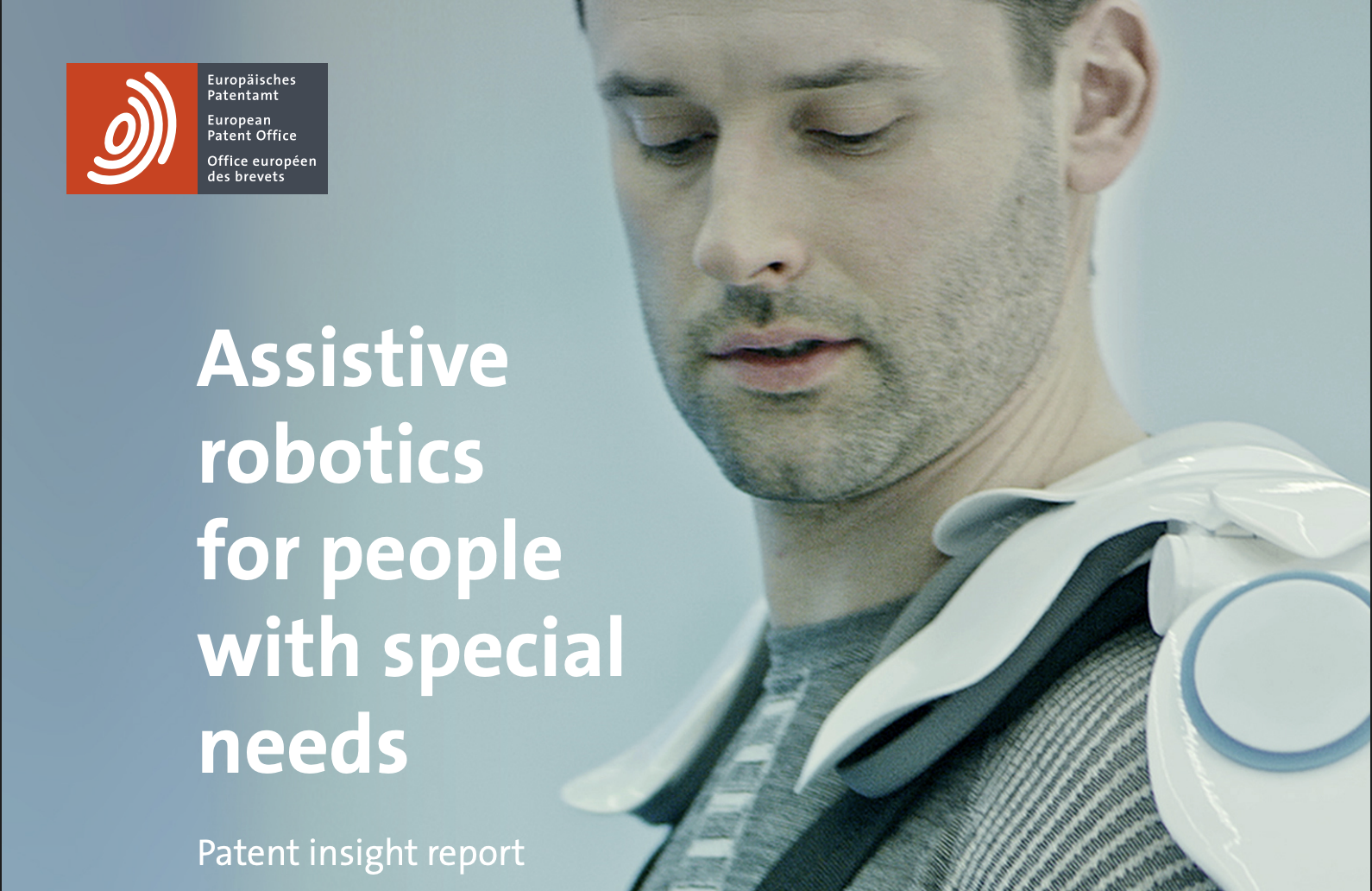
On the International Day of Persons with Disabilities, we highlight new insights from the European Patent Office on how innovation and IP protection accelerate inclusion.
The EPO’s latest Patent Insight Report shows that assistive robotics is becoming one of the most dynamic areas of medical technology, transforming mobility, rehabilitation, independent living and social participation for people with disabilities.
Innovation is accelerating
Over 25,000 inventions in assistive robotics were identified, with patent filings growing more than 20-fold between 2001 and 2021, far outpacing the global average for all technologies.
High economic and societal expectations
A striking proportion of filings are international patent families, signalling applicants’ confidence in the global commercial potential and long-term relevance of these technologies.
Robotics supporting autonomy and inclusion
The report highlights six rapidly evolving categories:
- Therapeutic robots supporting rehabilitation
- Assistive exoskeletons enabling mobility and strength
- Robotic walkers offering balance and safe gait assistance
- Cobots assisting with daily tasks
- Robotic mobile platforms enabling independent navigation
- Humanoid & pet robots supporting social interaction and cognitive well-being
(Overview on pp. 7–12)
These innovations contribute directly to UN SDG 10: Reduced Inequalities, helping users maintain autonomy, dignity and social participation.
Asia leads, but innovation is global
Japan and Korea dominate the filing activity, especially in exoskeletons and mobile platforms. Meanhile, European companies lead in cobots. Universities in both the EU and the US remain strong contributors.
Why IP matters
Patents play a critical role in:
- Incentivising investment in complex robotics
- enabling safe, regulated and validated deployment
- protecting core technologies (sensors, actuators, AI-driven control systems)
- supporting global commercialisation strategies
As the report notes, international patent filings are a strong indicator of where innovators see real potential to scale solutions that improve lives.
Read full report here.